How to change PHP versions in VestaCP Ubuntu – Downgrade Upgrade 5.6, 7.1 and 7.2

On Ubuntu 18.04, VestaCP uses PHP 7.2, because that’s the version Ubuntu ships. Some applications needed an older PHP at the time (older Magento 2 releases, for example, didn’t support 7.2 yet), so I switched the server to PHP 7.1. The same steps work for any version the PPA below provides, such as 5.6: replace 7.1 with that version in every line. Run these over SSH as a user with sudo rights. Since the commands change the PHP version for every site on the server, check that all of them work with the version you’re switching to. ...

October 20, 2018 · 3 min · Harshvardhan Malpani

How to remove all tables from MySQL Database?

This drops every table in a MySQL database but keeps the database itself. I use it to empty a database before importing a fresh dump when my MySQL user isn’t allowed to run DROP DATABASE and CREATE DATABASE, which is common on shared hosting. Warning: this permanently deletes every table in the selected database, with all its data. There is no undo. Before you run it: Take a backup, for example with mysqldump, and check that the backup file isn’t empty. Make sure you’re in the right database: SELECT DATABASE(); shows the one currently selected. Preview exactly which tables will go by running the same lookup the script uses: SELECT table_name FROM information_schema.tables WHERE table_schema = DATABASE(); Connect to your MySQL host and select the database to be used. Example: use notfavoritedb; where notfavoritedb is your database name. Then enter the SQL commands given below: ...

October 19, 2018 · 3 min · Harshvardhan Malpani

This is what CSS can do.

Are you ready for the magic? I am saying this because I believe that coding is closest to a superpower that we have. And the best part is that anyone can achieve this superpower. Here we are going to see how a single HTML file can look entirely different with just the change in CSS file. Mind that no front-end-framework has been used in the upcoming designs, it is just the beauty of pure CSS. ...

October 19, 2018 · 2 min · Harshvardhan Malpani

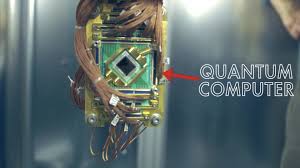
Quantum Computers: Technology from the future.

Either you talk about research, space exploration, or advancement of new technologies. Computers have become an inseparable part of our life. In the last few decades, we have reduced the size of the computer and increased its computation power. Today’s smartphones are much smaller and faster than the giant military computers 50 years ago. We have also been able to build super-computers, currently the most powerful system. Even after so much advancement in computers, there is still some limitation that has not been conquered yet! ...

October 18, 2018 · 3 min · Harshvardhan Malpani

Deploying a live site with free Domain and Hosting.

Hello everyone! In this article, we are about to create an entirely new site from scratch with free domain and free hosting. I am going to create one for the sake of this tutorial, which you can visit to check at the end of this article. Before we start, let me clear this for one last time: for the domain, we are using freenom.com and for hosting we are using 000webhost.com. Let’s do it: ...

October 15, 2018 · 3 min · Harshvardhan Malpani
binary code

Bit & Byte: The storage system.

You may have heard Bit & Bytebefore, but do you really know what is it? How does the computer storage system work? We are continually generating a lot of data every second, hence there should be a storage system strong enough to handle it all. In this post, we are gonna talk about this storage system. “Over 2.5 quintillion bytes of data are created every single day, and it’s only going to grow from there. By 2020, it’s estimated that 1.7MB of data will be created every second for every person on earth.” In the next article, we will also talk about the next generation of computer storage system (Quantum Computing.) What is Bit & Byte? A Bit is the smallest or basic unit of computer information which has only two values “0 or 1”. These two values can also be defined as “true or false” and “yes or no”, depending on the binary code. A Byteis the smallest unit of memory. One byte is made up of eight bits, that means one byte is one character of information and is comprised of eight bits (eight 1’s or 0’s). Here is a table to clear out your confusion. Unit\Value Unit Value 0 (Off) or 1 (On) 1 Bit 8 Bits 1 Byte 1,024 Bytes 1 Kilobyte 1,024 Kilobytes 1 Megabyte 1,024 Megabytes 1 Gigabyte 1,024 Gigabytes 1 Terabyte 1,024 Terabytes 1 Petabyte 1,024 Petabytes 1 Exabyte 1,024 Exabytes 1 Zettabyte What is 32 bit / 64 bit? Many times while downloading a software, we get to see two options – ” download in 32 bit” or “download in 64 bit”. So, let’s see what is 32 bit / 64 bit? The terms 32-bit and 64-bit define the fixed-size piece of data a processor can transfer to and from memory. So, in theory, 64-bit computers can handle data twice as fast 32-bit systems. The term for 64-bit computer architecture is x64, and the 32-bit computer architecture is most commonly known as x86and was based on the Intel 8086 / 8088 processor. The Intel 8086 / 8088 processor was found in the original stand-alone Pac-Man video arcade console. The storage system: Different users can have different storage requirements. Knowing what a computer is going to be used for (and of course many computers are used for a variety of purposes) is hence very important when planning storage requirements. So let’s continue with some of the available storage devices and technologies. HARD DISK STORAGE: Spinning hard disk (HD) drives are today the most common means of high capacity computer storage, with most desktop and laptop computers still relying on a spinning hard disk to store their operating system, applications programs, and at least some user data. RAID: On servers and high-end PC workstations (such as those used for high-end video editing), at least two hard disks are often linked together using a technology called RAID. This stands for “redundant array of independent disks” (or sometimes “redundant array of inexpensive drives”), and stores the data in each user volume on multiple physical drives. DIRECT ATTACHED STORAGE (DAS): Except where two internal hard disks are considered essential on the basis of performance, a second hard disk is a today most advisably connected as an external unit, or what is sometimes now known as a “DAS” or direct attached storage drive OPTICAL DISK STORAGE: Almost all optical storage involves the use of a 5″ disk from which data is read by a laser. Optical media can be read-only, write-one, or rewritable, and currently exists in one of three basic formats – CD(compact device), DVD(digital versatile disk), BD(blue ray disk). SOLID STATE DRIVES: Solid state storage devices store computer data on non-volatile “flash” memory chips rather than by changing the surface properties of a magnetic or optical spinning disk. With no moving parts solid state drives (SSDs) — are also very much the future for almost all forms of computer storage. FLASH MEMORY CARDS: Flash memory cards were developed for digital cameras and mobile computers. They consist of a small plastic package with a contact array that slots into a camera or other mobile computing device, or an appropriate memory card reader. SD CARDS: SD cards are the most popular flash memory cards now on the market, and come in so many variants that they do require some explanation. SD cards come in three physical sizes. Standard size SD card, Mini SD card, Micro SD card. USB MEMORY STICK: USB memory sticks (or USB memory keys, USB memory drives, or whatever you choose to call them!) are basically a combination of a flash memory card and a flash memory card reader in one handy and tiny package. NETWORK AND ONLINE STORAGE: Files stored and/or backed-up online are still saved to a hard disk rather than to some magic, new alternative media. However, the fact that the disk is located remotely to your computer, can be accessed from anywhere and is probably backed up by the service provider(?), can make online storage and back-up very attractive. The last few years have seen the death of the floppy disk and for many digitizations of photography and their music collection. ...
October 13, 2018 · 5 min · Harshvardhan Malpani
data breach

Solid-Inrupt: Welcome to the internet 2.0.

List of Data Breaches from 2005 to 2018. – Wikipedia. Before going ahead I want you to check out the list above, it will give you an idea that what is happening to your personal data, and there is no privacy at all. Take the recent Cambridge Analytica & Facebook case, 5 million individuals data was leaked or sold by Facebook. Also, you may have heard the latest one about G+, Google plus is shutting down after 500,000 users data was exposed. On the internet, there is no such thing as Privacy. Yes! it is something to be worried about. OR Maybe not anymore. Enough is enough, the father of the internet want the power back in his hands. His dream was to create a secure network where individuals would have been the owner of their own data, but surely that is not happening with WWW. So, Tim Berners Lee decided to rebuild the internet. Solid Inrupt: About. Solid Inrupt is the name of this project of remaking the internet. Here is the official site of solid inrupt. https://solid.inrupt.com Tim Berners Lee took this project of the new internet because as the internet evolved it diverged from Sir Tim’s original and inspiring vision. (Individuals to be the king of the internet). Tim and Team have given 15 years to make it a reality. Tim wants to provide a platform for the next generation of truly empowering and innovative developers. How it works: You decide where you store your data. Since you own your data, you’re free to move it at any time, without interruption of service or penalties. whenever you’re opening up a new app, you don’t have to fill out your details ever again: they are read from your POD with your permission. Things saved through one app are available in another: you never have to sync, because your data stays with you. What is POD? Your POD is your personal storage space. All your data will be stored in your POD, not on the server of Facebook or Google, where they can manipulate it. PODs are like secure USB sticks for the Web, that you can access from anywhere. When you give others access to parts of your POD, they can react to your photos and share their memories with you. You can have as many PODs as you like, and they live on Solid enabled Web servers. Install the Solid Server on your own server at your home or workplace, or Get a Solid POD from a listed provider. In order to prove ownership of your data, you need a way to identify yourself. Rather than relying on a third party, you can use your Solid POD to say who you are. So no more “Log in with X” or “Log in with Y” on the Web — just “Log in with your own Solid POD”. What it holds for the Developers? As far as claimed by the Solid Inrupt team, it is going to be a very promising platform and gonna create more opportunities for developers. If you are a developer or planning to be one, then you can check their get started guide for developers. Here is the link to the official documentation page of Solid Inrupt. https://solid.inrupt.com/docs/getting-started But do you think that the current internet Kings like Google, Facebook and Amazon will let the power slip by their hands? They will surely not give up. Now only time can tell what will happen, or who will win? Father of internet V/S Kings of internet ...

October 11, 2018 · 3 min · Harshvardhan Malpani

Default .htaccess file for wordpress with compression and caching tweaks

Here is the default .htaccess file for WordPress, plus two additions I put on most WordPress sites: browser caching and gzip compression. You need the default file when pretty permalinks stop working (every page except the home page returns a 404), when the file has been deleted or broken by a plugin, or when you’ve moved a site to a new server. If you are using cPanel, before you proceed make sure that you don’t have an htaccess file already. The default File Manager settings in cPanel hide it, because its name starts with a dot. Turn on “Show Hidden Files (dotfiles)” in the File Manager settings to see it. ...

October 9, 2018 · 5 min · Harshvardhan Malpani

How to change name-server in Godaddy and other registrars?

Hi Everyone! In this post, we are going to talk about the process of changing nameserver in Godaddy and other popular registrars. You would need to do this process to connect or point your domain to your hosting, or whenever you decide to change your hosting service provider, as hosting providers ask to park the domain that you own. The process is basically the same in all registrars, the only difference is in their visual interface. ...

October 9, 2018 · 3 min · Harshvardhan Malpani

How to fix WordPress locked error from wp-admin login by jetpack plugin?

You should now be able to login again, and this issue shouldn’t repeat itself. Jetpack’s Protect function looks at the incoming IP address when you try to login, and compares it against our network of blocked IPs. This works pretty well, unless Jetpack’s Protect is being told the wrong IP address by your site’s server. In your case, your server was reporting its own IP address to Protect, which is why it was blocked. This meant that every single time someone with a WordPress site on your site’s server entered the wrong password, we thought it was the same person. If your hosting provider has several hundred WordPress sites on the same server/IP, that adds up fast, leading to a ban on the IP. I’ve made a couple of changes on our side, and Jetpack’s Protect feature will now determine incoming IP addresses a different way. You’re still protected! – Jeremy Herve (@jeherve) – Plugin author ...

October 7, 2018 · 2 min · Harshvardhan Malpani